ARTIST SPOTLIGHT: Lenny Pennell | Biomorphic Artist: The More You Explore, the More You Discover

Updated: Sep 16
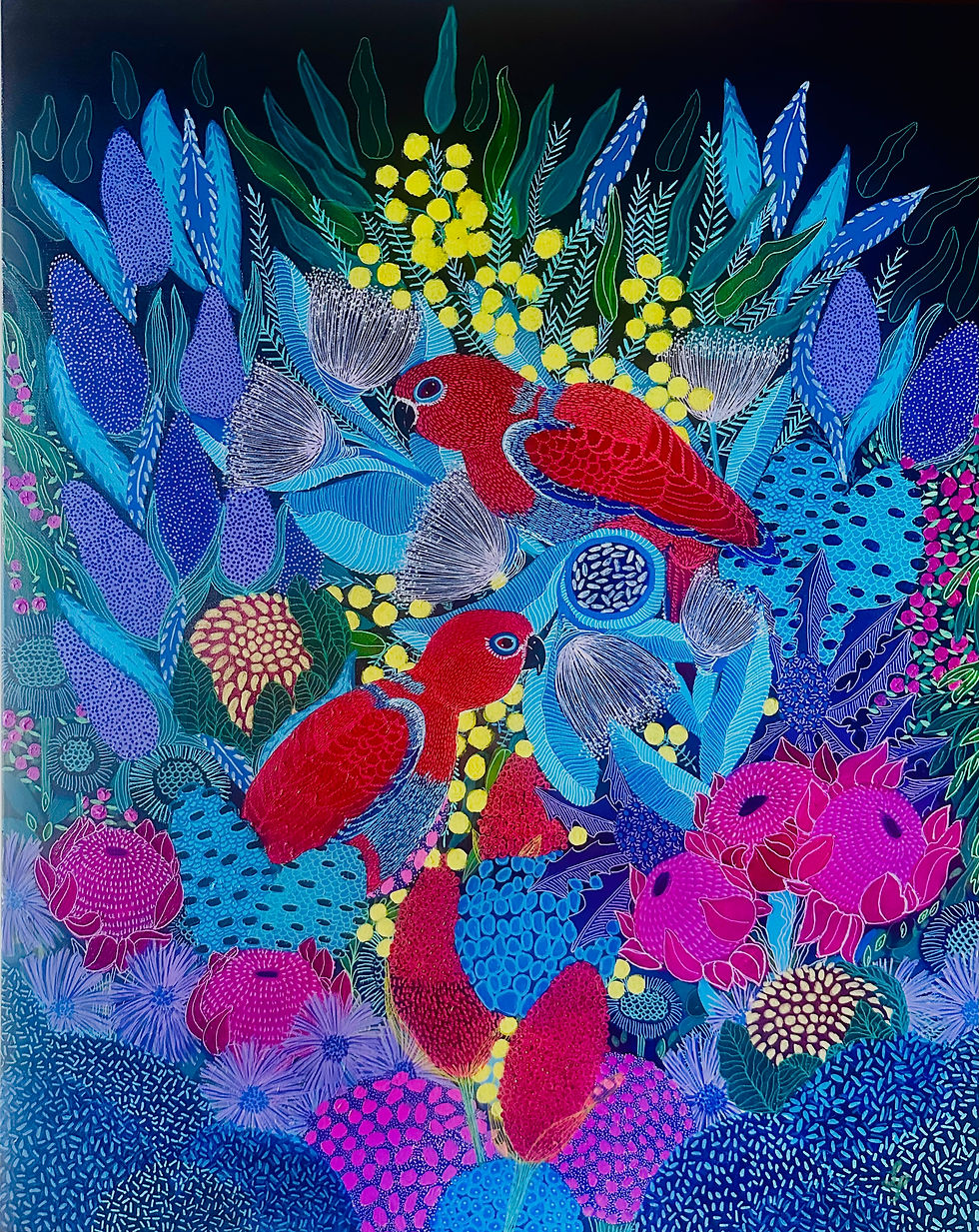
Art has always been an important part of Lenny Pennell’s life. As both an artist and educator, creativity is part of her everyday world, with teaching encouraging her to continually explore new materials, processes and ideas.
Lenny describes her artistic style as biomorphic, organic and constantly evolving, characterised by flowing forms, repeated patterns, layered textures and shapes that appear as though they could have grown naturally.
“I am particularly interested in creating forms that feel familiar but cannot necessarily be identified. They might suggest coral, cellular structures, marine organisms, fungi, microscopic life or something completely imagined.”
She enjoys that ambiguity and the tension between the beautiful and unusual. A work may initially appear delicate or attractive, but on closer inspection become strange, unfamiliar or even slightly unsettling.

Inspired by Nature
Lenny’s greatest influence is the natural world, particularly the forms, patterns and textures that can easily be overlooked. Marine environments are a rich source of inspiration, from coral structures and shells to microscopic organisms and reef environments.
“I am fascinated by the idea that the closer you look at nature, the more there is to discover.”
Rather than reproducing nature literally, Lenny uses it as a starting point, repeating, distorting, enlarging or combining natural forms until they begin to develop an identity of their own.
Her creative process generally begins with observation and curiosity rather than a fully resolved idea. As the work develops, she allows the materials and unexpected outcomes to influence its direction.
“I may begin with one intention, but the work often changes as unexpected forms emerge. I enjoy allowing that unpredictability to become part of the finished piece.”

Materials, Experimentation and Growth
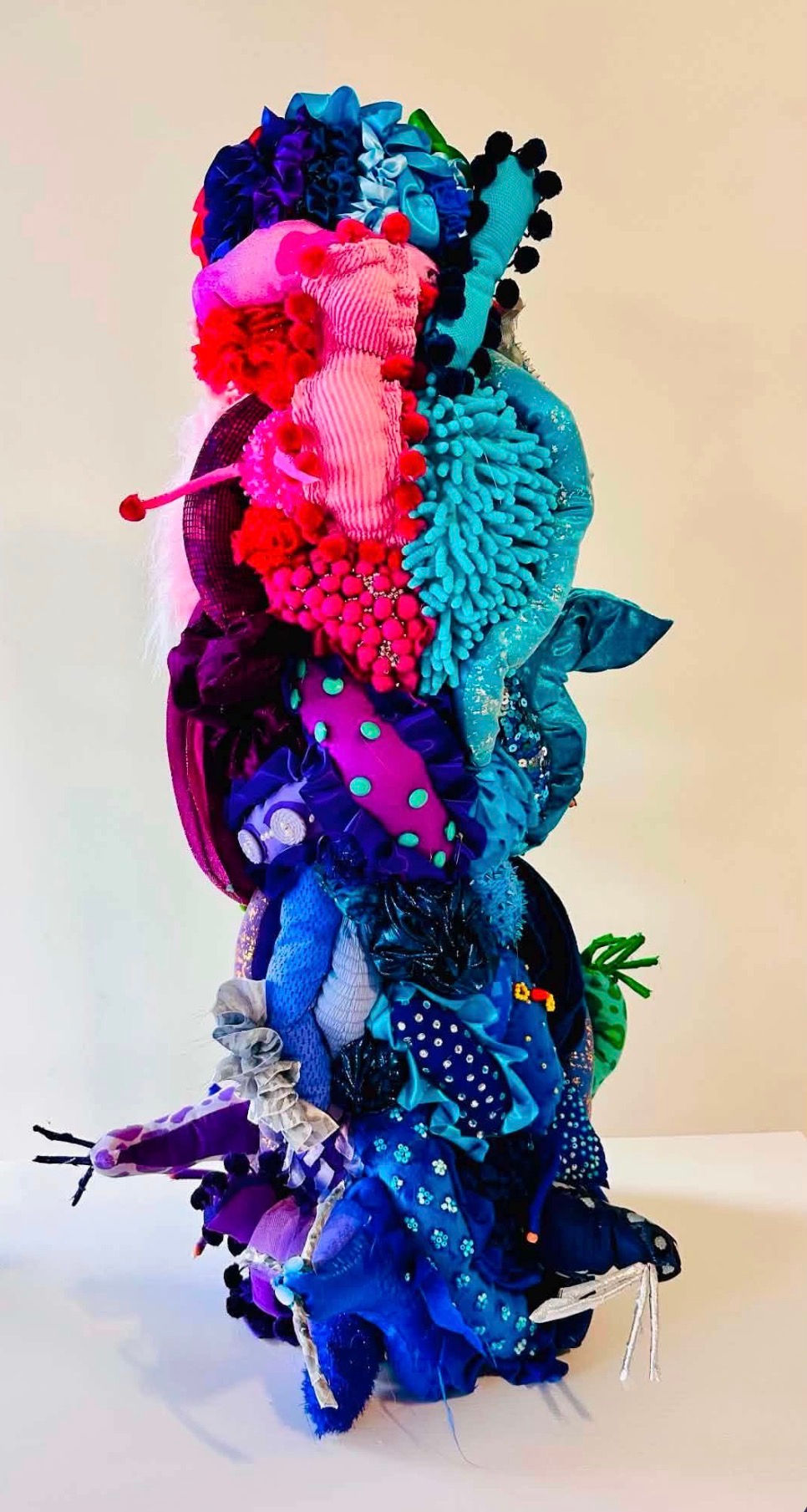
Lenny works across a range of mediums, particularly those that allow her to explore texture, surface and three-dimensional form.
Clay is a favourite because it can be pushed, carved, impressed, built and manipulated into organic forms. She also enjoys acrylics for creating texture and textiles for building layers of colour, pattern and form.
A turning point in Lenny’s artistic journey came when she moved away from simply representing what she could see and began interpreting and transforming it.
“A coral formation, cellular structure or marine organism can become a starting point rather than an endpoint.”
Her work has since become increasingly experimental and organic, and she has become more comfortable with not knowing exactly where an artwork is heading.
“Sometimes an artwork doesn’t develop in the way you imagined. I have learned that this doesn’t necessarily mean the work has failed. Often the unexpected direction is more interesting than the original plan.”

Creating a Sense of Discovery
Just as curiosity drives Lenny’s creative process, she hopes it is also what draws people into her finished work.
She wants viewers to be attracted visually at first, but then become curious enough to move closer and investigate.
“From a distance, a piece might appear as one overall organic form, but closer inspection reveals individual textures, patterns and structures. I want there to be a sense of discovery, almost as though the viewer is encountering an organism or environment they haven’t seen before.”
Lenny doesn’t want to dictate what that organism or environment might be. She prefers viewers to form their own interpretations rather than feeling there is one correct way to understand the work.
“Nature contains forms that are incredibly beautiful, complex and sometimes strange. I want my work to capture some of that feeling.”
Underlying it all is an invitation to look more carefully at the world around us.
Advice to Emerging Artists
For artists at the beginning of their own creative journey, Lenny’s advice reflects the way she approaches her own practice: be curious.
She encourages artists not to become too concerned with finding their “style” immediately, but instead to look closely at the things that genuinely interest them and simply keep making.
“Experiment with different materials and processes. Some things will work and others won’t, but both experiences are valuable.”
Most importantly, she believes artists should pay attention to what repeatedly captures their curiosity, because those recurring interests can ultimately become the foundations of their artistic voice.
It is something Lenny wishes she had understood earlier in her own journey.
“You don’t need to have everything figured out before you begin. The creative process is not always about executing a perfect idea. Sometimes you discover the idea through making.”
For Lenny, experimentation, mistakes and unexpected outcomes are not interruptions to the artistic process. They are often the most important part of it.
And perhaps that is the idea that best captures both Lenny’s art and her approach to creativity:
“The natural world is endlessly complex, and the more you explore, the more you discover.”
Comments